
Serengeti balloon safari and the migration: which launch area is open when the herds are there
Four launch areas, four calendars: Seronera flies all year, Kogatende June to November, the west June to October, Ndutu mid-December to March. Set against the herds, they match for most of the year and miss in one stretch.
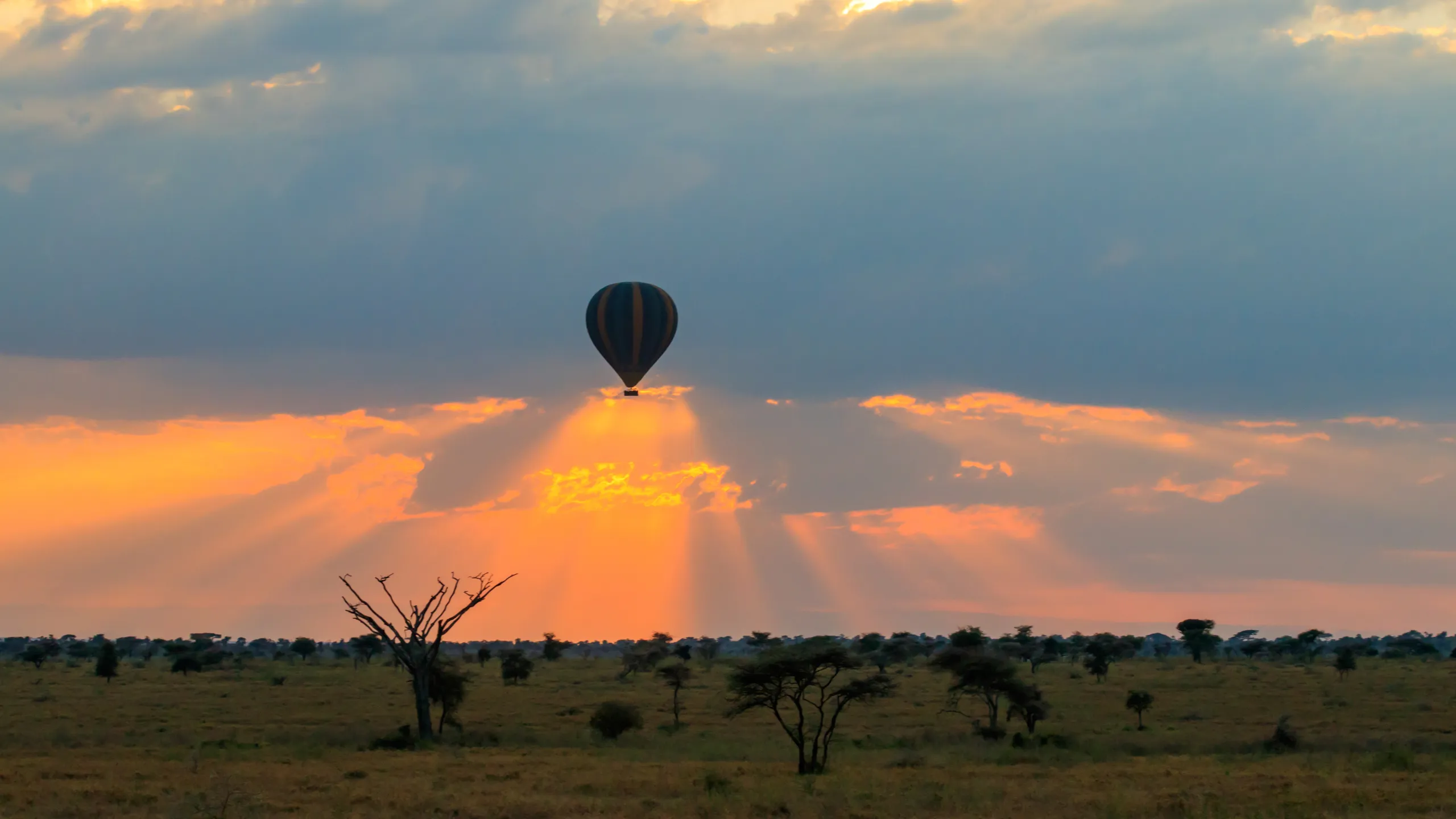
A Serengeti balloon safari is sold as a view of the migration. The herds and the launch sites keep different calendars, and on a booking page the difference is easy to miss.
This site lists four balloon safaris in Tanzania: three over the Serengeti and one over Tarangire, from 499.96 to 584.50 euros, median 544.50, read on 4 November 2026. Only one of the four says where in the park it flies, and it says it by month. Seronera runs all year, Kogatende from June to November, the western Serengeti from June to October and Ndutu from mid-December to the end of March. Lay that beside what the guides say the wildebeest do in a year and the two match for most of it. There is one stretch where they do not, and it starts about now.
What the migration does in a year, and how far to trust the calendar
The pattern is the same in every guide this desk could read. The dates are not. The herds calve on the short grass plains of the south, around Ndutu, from late January into March, and February is the peak. Several guides put the number at about 500,000 calves over two to three weeks; one says more than a million wildebeest give birth in the area, so take the figure as an order of magnitude. After the calving the herds drift north and west. Grumeti River crossings are placed in June and July by one set of itineraries and in May and June by another. The Mara River crossings in the north are placed from July to October, with August and September named as the strongest by several sources, and one carrying them into early November. Then the short rains arrive, usually late October or November, the herds turn south, and by December most are back where they calved.
Two caveats come with that. First, every source is a safari operator or a travel publisher. None is a park authority or a study, and the pages could only be read here as search excerpts, not opened in full. Second, the sources describe rainfall, not a timetable. One says in so many words that the migration is a circular, year-round event rather than a fixed calendar show, and another that the southern plains often do not get good rain until late, so herds can move south and then back north again. Treat the table below as a pattern that shifts by weeks from one year to the next.
| Months | Where the herds are | Where the sources differ |
|---|---|---|
| January to March | Southern plains around Ndutu; calving from late January, peak in February | The size of the calving, from about 500,000 calves to over a million births |
| April and May | Moving north and west through the park | Little precise detail; depends on the rains |
| May to July | Western corridor, Grumeti River | Crossings placed in May and June by one source, June and July by another |
| July to October | Northern Serengeti, Mara River crossings | Start in July or August; peak in August and September; some crossings into early November |
| November | Heading south through the central Serengeti | First herds reach the south between late November and early December |
| December | Back on the southern plains | Depends on when the short rains come |
The four launch areas of a Serengeti balloon safari
The most reviewed Serengeti listing on this site, 3,677 reviews at 4.9, is the only one that spells out where it flies. The operator launches from Seronera in the central park all year, from Kogatende in the north from June to November, from the western Serengeti, listed under the Grumeti River, from June to October, and from Ndutu in the south from mid-December to the end of March. In the listing's own words the operation follows the animals rather than the other way round. Whatever else is said about the price, that is a real difference: the balloon is not over the same ground in August and in February.
The other two Serengeti listings name Seronera and nothing else. The second most reviewed, 2,799 reviews at 5.0, has guests arrive at the launch site at 5:45 for tea and coffee while the balloons are laid out, and its itinerary puts the hour in the air at Seronera. The third launches from Seronera too. That does not make them worse products. It makes them a flight over the centre of the park in any month, over whatever happens to be there that morning, and a buyer who wants the northern river or the southern plains has to ask the operator which base a given date uses. The page will not say.
| Launch area | Part of the park | Months on the listing | What the guides place nearby |
|---|---|---|---|
| Seronera | Central | All year | Herds in transit, heading south in November; resident animals the rest of the year |
| Kogatende | North | June to November | Mara River crossings, July to October |
| Kiwarira (Grumeti River) | West | June to October | Grumeti crossings, May to July depending on the source |
| Ndutu | South | Mid-December to end of March | Calving, late January to March; herds arriving in December |
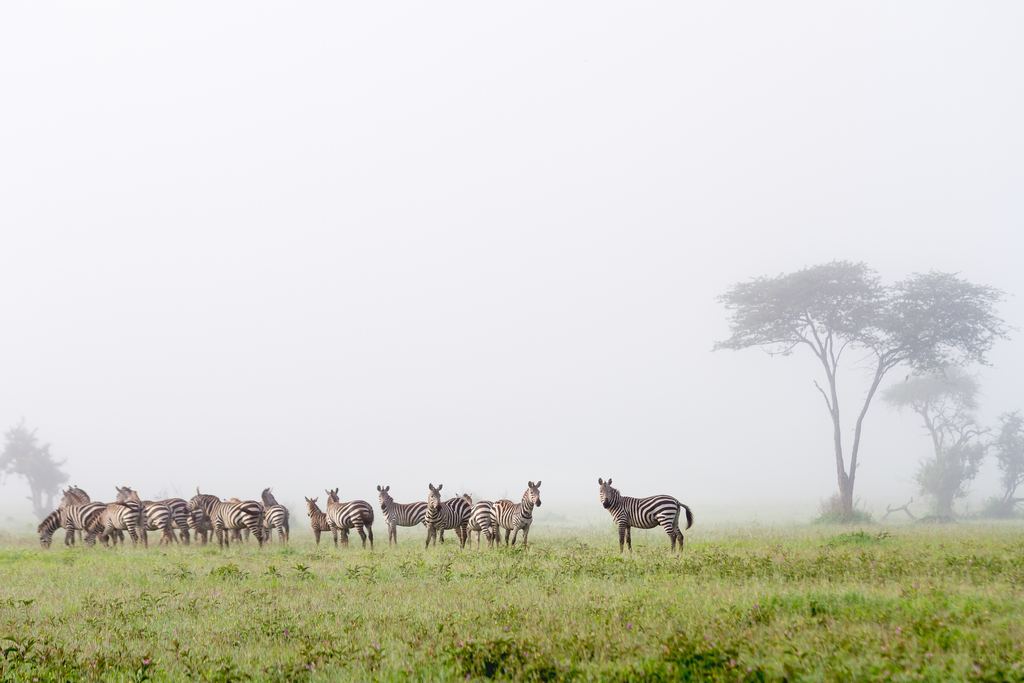
The western base, on the Grumeti
The western launch is the least discussed of the four and the one with the shortest guide consensus. The listing has it flying from June to October, which covers both versions of the Grumeti crossing dates, May and June or June and July, only in part: a May crossing falls before the base opens. If that stretch is the reason for the trip, ask what the operator does in the weeks either side of it.
The photograph shows zebras in the Grumeti Game Reserve, which borders the western corridor. It is a stock image of animals that live there year-round, not a record of a flight.
The thin stretch: November to mid-December
Put the two calendars together and four windows fall out. From June to October the northern and western bases are open while the herds are in the west and then the north, and the river crossings sit inside that. From late January to March the southern base is open while the herds calve. Those are the months where the product and the spectacle line up.
Then there are the gaps. April and May have Seronera and nothing else on the listing, while the herds are moving through. And there is the one that matters today, 4 November. The northern base is listed to November, and the guides say the herds start leaving the north at about this time. The southern base does not open until mid-December. Most guides have the first herds settling on the southern plains by early December. On the listing's own dates the herds are home about two weeks before the southern balloon is.
On the listing's own dates, the herds are back on the southern plains about two weeks before the southern balloon base opens.
That is not a flaw. A balloon crew needs the herds to stay put for a season before it moves a base, and in a rainfall-driven system the dates will always trail the animals a little. But it is the sort of detail that never reaches a booking page, and it changes what a December trip is. A flight from Seronera in the first half of December is a very good morning over the central plains. It is not the calving, which has not started, and it is not the crossings, which ended weeks ago.
Which launch area is open, month by month
Months as stated for each base in the most reviewed Serengeti listing on this site. This is when the balloon is based there, not when the herds are.
| Month | 1 | 2 | 3 | 4 | 5 | 6 | 7 | 8 | 9 | 10 | 11 | 12 |
|---|---|---|---|---|---|---|---|---|---|---|---|---|
| Seronera, central The one base listed all year. The herds pass through in transit rather than stay. | 1 | 2 | 3 | 4 | 5 | 6 | 7 | 8 | 9 | 10 | 11 | 12 |
| Kogatende, north Listed June to November, which covers the Mara River crossings that guides place in July to October. | 1 | 2 | 3 | 4 | 5 | 6 | 7 | 8 | 9 | 10 | 11 | 12 |
| Kiwarira, west (Grumeti River) Listed June to October. A May crossing, where a guide places one, falls before the base opens. | 1 | 2 | 3 | 4 | 5 | 6 | 7 | 8 | 9 | 10 | 11 | 12 |
| Ndutu, south Listed from mid-December to the end of March, covering the calving that guides place from late January. | 1 | 2 | 3 | 4 | 5 | 6 | 7 | 8 | 9 | 10 | 11 | 12 |
Months from the Serengeti Balloon Safaris listing on this site, read 4 November 2026. Confirm the base for your date with the operator.
Three Serengeti balloon safari listings compared
| Listing | Price | Reviews | Where it says it flies | Limits stated on the page |
|---|---|---|---|---|
| Serengeti Balloon Safaris, bush breakfast under an acacia | 544.50 | 4.9 from 3,677 | Seronera, Kogatende, western Serengeti and Ndutu, by month | Children under 7 not allowed; up to 15 travellers per booking; guiding in four languages |
| Miracle Experience, sunrise with bush breakfast | 544.50 | 5.0 from 2,799 | Seronera; arrival at 5:45 | Minimum height 120 cm, maximum weight 120 kg, not for impaired mobility; guiding in three languages |
| Seronera flight with champagne breakfast | 584.50 | 5.0 from 3 | Seronera | Up to 4 travellers per booking; guiding in English only; hotel transfers from selected Serengeti accommodation |
| Miracle Experience, Tarangire | 499.96 | 5.0 from 254 | Tarangire, not the Serengeti | See the listing |
Three things in that table are worth a second look. The 5.0 on the third listing rests on three reviews, and it is the dearest of the four by 40 euros. A top mark from three people is a start, not evidence, and the sort that matters on this site is the number of reviews behind the rating. All three Serengeti listings state the flight at about an hour and the whole experience at five hours, so the extra money is not buying air time.
The second thing is the operator's history. The most reviewed listing says the company has been flying in the Serengeti since the 1970s and, in the same paragraph, that it has 30 years of experience. Both cannot be true, and the operator's own news page is titled, in the search results, as 30 years of balloon safari experiences. This piece uses neither date.
The third is what the price leaves out. Two of the three Serengeti listings state that the park entrance fee is not included if the camp or lodge is outside the park, and one adds that transfers from outside the park are not covered. The sum on the booking page is not the sum of the trip. The same logic applies to every destination we compare, and our guide to what a balloon ride costs sets out how to read an all-in figure.
What a balloon safari promises about the herds
Nothing, on the pages we read. The Miracle Experience listing says elephants, giraffes, zebras, wildebeest and lions are all on the list, and that the pilot explains how the ecosystem fits together. The most reviewed listing says the hour is spent over the plains and whatever is moving on them. The third says nothing about animals at all. Not one of the three promises a river crossing, a herd or the calving.
That is honest, because it cannot be promised. The listings say the wind sets the route: the crew knows the launch point and not the landing point. A crossing, by the guides' account, is unpredictable, and one says plainly that you wait, sometimes for hours. An hour in a basket that goes where the air goes is a poor match for an event with no schedule. The realistic version of the claim is smaller. In the right month the balloon is based in the right part of the park, so a morning has a better chance of herds below. It is the odds that the base improves, not the outcome.
Tarangire is the other answer for the months when the Serengeti herds are out of reach. The listing describes it as the quieter of the two Tanzanian parks the operator flies, elephant country with baobabs standing out of the ground. It is a different park with a different year, so it belongs in a separate trip plan and not under the migration. It does have its own calendar to check, and the listing is where to start.
How to book a Serengeti balloon safari around the migration
Start from the spectacle, not the date. The river crossings and the calving are different trips, in different halves of the park, in different halves of the year, and the booking page for a single flight treats them as one.
- For the crossings, aim at the middle of the overlap: August or September, when the northern base is open and most guides put the herds at the river.
- For the calving, think late January to March. The southern base opens in mid-December, but the calving has not started, and a December morning there catches herds arriving.
- If the dates are fixed and fall in April, May or the first half of December, a Seronera flight is what you can buy. Treat the herds as a chance, not a plan.
- Ask the operator, in writing, which base your date uses. Two of the three Serengeti pages name Seronera and are silent on the rest.
- Check what is outside the price: the park entrance fee, if you sleep outside the park, and transfers from beyond its edge.
All three Serengeti listings state free cancellation up to 24 hours before departure. Our guide on how to choose an operator covers what to ask before paying, and the season page for each destination puts the Serengeti next to the other places in the catalogue. If the trip is open on dates, our winter piece, where to fly a hot air balloon in winter, shows where the Serengeti sits between November and February against the rest, and the piece on shared baskets and private flights explains why the 15-person and 4-person bookings above are different products.
The most reviewed Tanzania balloon safaris
Chosen by the number of reviews behind them, not by price. Prices as listed on 4 November 2026; the grid shows only what is still published.
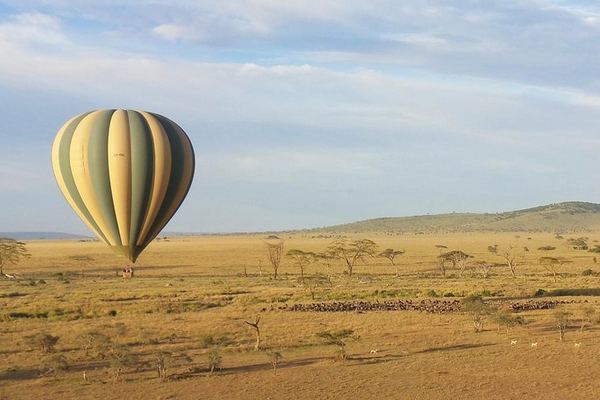
Serengeti Balloon Safari with Bush Breakfast under an Acacia
Flying the Serengeti since the 1970s: an hour that brushes the tops of the grass then climbs, and a full English breakfast laid out under an acacia.
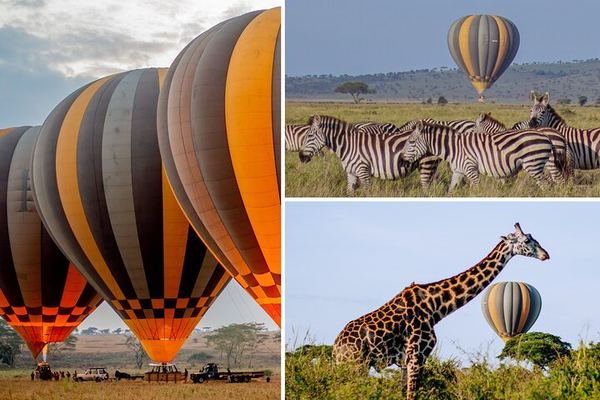
Serengeti Balloon Safari at Sunrise with Bush Breakfast
Tea at 5:45 while the balloons inflate, take-off at sunrise, an hour over the plains with multilingual pilots, then a bush breakfast cooked on site.
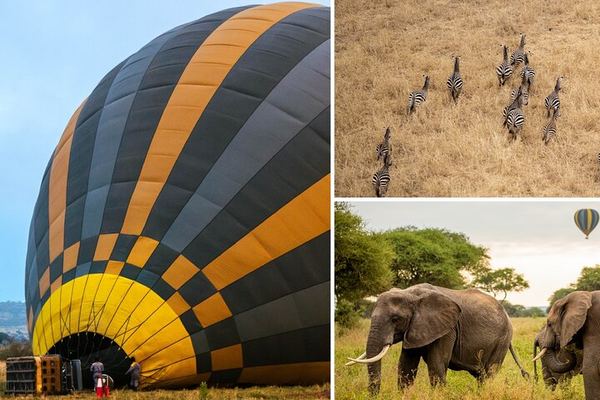
Tarangire Balloon Safari at Sunrise with Bush Breakfast
Tarangire is the quieter park: elephant country, with baobabs standing out of the ground below. Take-off at sunrise, bush breakfast cooked on site.
Ratings collected by Viator and Tripadvisor
Questions people ask about a Serengeti balloon safari
When is the best time for a Serengeti balloon safari?
It depends on what you want below you. For the Mara River crossings, guides place them from July to October, strongest in August and September, and the northern launch area is listed from June to November. For the calving, guides place it from late January to March, with February the peak, and the southern launch area is listed from mid-December to the end of March. Seronera, in the central park, is listed all year.
Can you see the river crossings from a balloon?
Not on any promise. Guides place the Mara River crossings from July to October, strongest in August and September, and the northern launch area is listed from June to November, so the base is in the right place. But no listing promises a crossing, the route follows the wind, and one guide notes that crossings are unpredictable and that you may wait hours. The base improves the odds; it cannot book the event.
Can you see the wildebeest calving from a balloon?
It is possible in the right months. Guides put the calving on the southern plains from late January into March, and the southern launch area is listed from mid-December to the end of March. Flying there before late January means seeing herds that have arrived and not yet calved. No listing promises it.
How much does a Serengeti balloon safari cost?
Read on 4 November 2026, the three Serengeti listings here cost 544.50, 544.50 and 584.50 euros, and the Tarangire flight 499.96. Two of the three Serengeti listings say the park entrance fee is not included if you stay outside the park, so the price on the page is not the full cost of the trip.
How long does the flight last?
About an hour in the air. The listings state about five hours for the whole experience, which includes the transfer, the launch-site briefing, the landing and a breakfast. On the Miracle Experience listing guests arrive at the launch site at 5:45 for tea and coffee, and take-off is at sunrise.
Does a Serengeti balloon safari fly all year?
One launch area does. The most reviewed listing has Seronera, in the central park, operating all year. Kogatende in the north is listed June to November, the western Serengeti June to October and Ndutu in the south from mid-December to the end of March. The other two Serengeti listings name only Seronera.
Who cannot take a Serengeti balloon safari?
The limits differ by listing. One does not allow children under 7. Another sets a minimum height of 120 cm and a maximum weight of 120 kg and excludes people with impaired mobility. Two of the three advise against it for travellers with spinal injuries or poor cardiovascular health, and for pregnant travellers. Our guide on who can fly covers the general rules.


Where these figures come from. Prices, review counts, ratings, launch areas and limits were read from this site's own listings on 4 November 2026, in euros as displayed, counting the English listings of the Serengeti and Tarangire category only. Prices move whenever a provider reprices. The migration timing comes from safari operator and travel-guide pages that could be read here only as search excerpts, which agree on the pattern and differ by weeks on the dates, and which are described as such above. No park authority or published study was read for this piece. Nobody from this desk flew any of these routes: the work was done on the catalogue and on the sources named above. The operator's contradictory dates were left out because they could not be checked.
Data verified on . Listings, prices and limits read from this site on 4 Nov 2026. Migration timing from operator and travel guides read as search excerpts; sources differ by weeks. Editorial Policy


